
When my mother died, I remember thinking: there is no alone that hits quite like “no mom” alone.
We had never been especially good at being close. Still, her absence left me feeling alone in a way I hadn’t known before. I had spent so much of my life wishing our relationship were different that I hadn’t understood what it would mean for it to be over.
There would be no more attempts. No unexpected conversation where we finally understood each other. Whatever I still wanted to ask her, whatever I hoped she might someday ask me, would remain unanswered.
I wonder how many daughters carry that hope long into adulthood. We build lives, make decisions, become people our mothers may only partly know. And somewhere in us, we still want them to know us.
My mother was a good person. A kind person. She would have given someone her last dollar or the shirt off her back. Generous to a fault, really.
Her generosity extended to me, too. She provided. She helped. If I needed something she could buy or fix or arrange, she was there. What I wanted from her was often something neither of us knew how to ask for or give.
I had everything I needed growing up, if you counted the things that could be bought. But I wanted her attention. Her curiosity about me. The feeling that she knew what to do with this daughter of hers or wanted to find out.
Sometimes I felt she was a little afraid of me. Almost as though she looked at me and thought, Well, I made this person. Now what?
She was eighteen when she had me. For the first year and a half of my life, my father was in Vietnam, and she was caring for me on her own. I think about how young she was. There is so much I never asked her about that time. What frightened her. What she had expected motherhood to be. Whether she had anyone she could tell when she didn’t know what to do.
At work, she seemed to know what to do. She built a career at a time when women without degrees and connections rarely made it beyond the secretarial pool. She was gifted at managing people. She recognized ability, encouraged it, helped people grow. She mentored so many people.
I was proud of her. I also wanted some of what they received.
For the first twelve years or so, I reached for her. After that, I began pulling away. I learned to ignore her, to make her angry, to act as though her attention was the last thing I wanted.
Then, sometime in my thirties, she wanted to be maternal.
I didn’t know how to meet her there. I had spent years practicing how little I needed her. We couldn’t simply start again because she was ready. But I grieve that, too: the times she may have been trying, and I couldn’t bring myself to respond.
From the outside, we looked close. My mother cultivated that impression, and there was enough truth in it to make it convincing. We did things together, usually with my aunt. People would tell me how lucky I was. It’s so cool, the relationship you have with your mother. You’re so close.
I never quite knew what to say. We spent time together. We had shared experiences. But there were parts of me I didn’t know how to bring to her.
If I needed emotional support, I went to my aunt. If I needed help—or someone to help me bury a body—I went to my mother.
That was real, too. I knew she would show up. I could count on her when something needed doing. But I could be sitting right beside her and still feel unable to tell her what was hurting me.
Perhaps that was why the distance was so difficult to explain. Everyone could see the ways she was there for me. Even I struggled to understand how I could have that kind of loyalty from my mother and still long for closeness with her.
One of her most familiar ways of reaching me was to buy something. Here, I got you this. Do you need money? How much?
Most times the help mattered. But afterward, we were still ourselves, still struggling to have a conversation that went much deeper.
When people speak of generational wealth, they usually mean the things that can be counted, inherited, divided. I understand the value of those things. My mother understood it, too. Providing was something she knew how to do.
But there are other things we receive from our mothers. Ways of caring for people. Expectations about what love should look like. Habits we recognize in ourselves years later. There are things we cherish, things we question, and things we spend much of our lives trying to understand.
I inherited the knowledge that my mother would come if I needed her. I also grew accustomed to keeping certain feelings to myself. Both became part of how I moved through the world.
I wonder how many women recognize that mixture in their own lives. Some have an ease with their mothers I have always envied. Others know the careful conversations, the subjects left alone, the longing that survives another disappointing attempt. A relationship can change over the years and still carry so much of where it began.
I miss my mother’s certainty. I miss doing things with her and my aunt. I miss her being here, available to call, part of whatever might happen next.
When I write about the distance between us, I worry that it makes our relationship sound empty. It wasn’t. She occupied an enormous place in my life. We could spend time together, help each other, share experiences—and I could still go home wishing she understood me better.
Now there is an emptiness in my life without her that I still struggle to explain. I grieve her presence and our unfinished relationship at the same time. I miss what we had. I ache over what we never quite managed.
I don’t want to reduce my mother to what I missed. Her kindness was real. Her accomplishments were real. So was the loneliness I sometimes felt beside her.
I wish I had understood her better. I wish she had known me better. I wish we had spent less time waiting for the other to become someone easier to reach.
What I have now are memories, questions, and a growing tenderness for two people who never quite figured out how to be mother and daughter to each other.
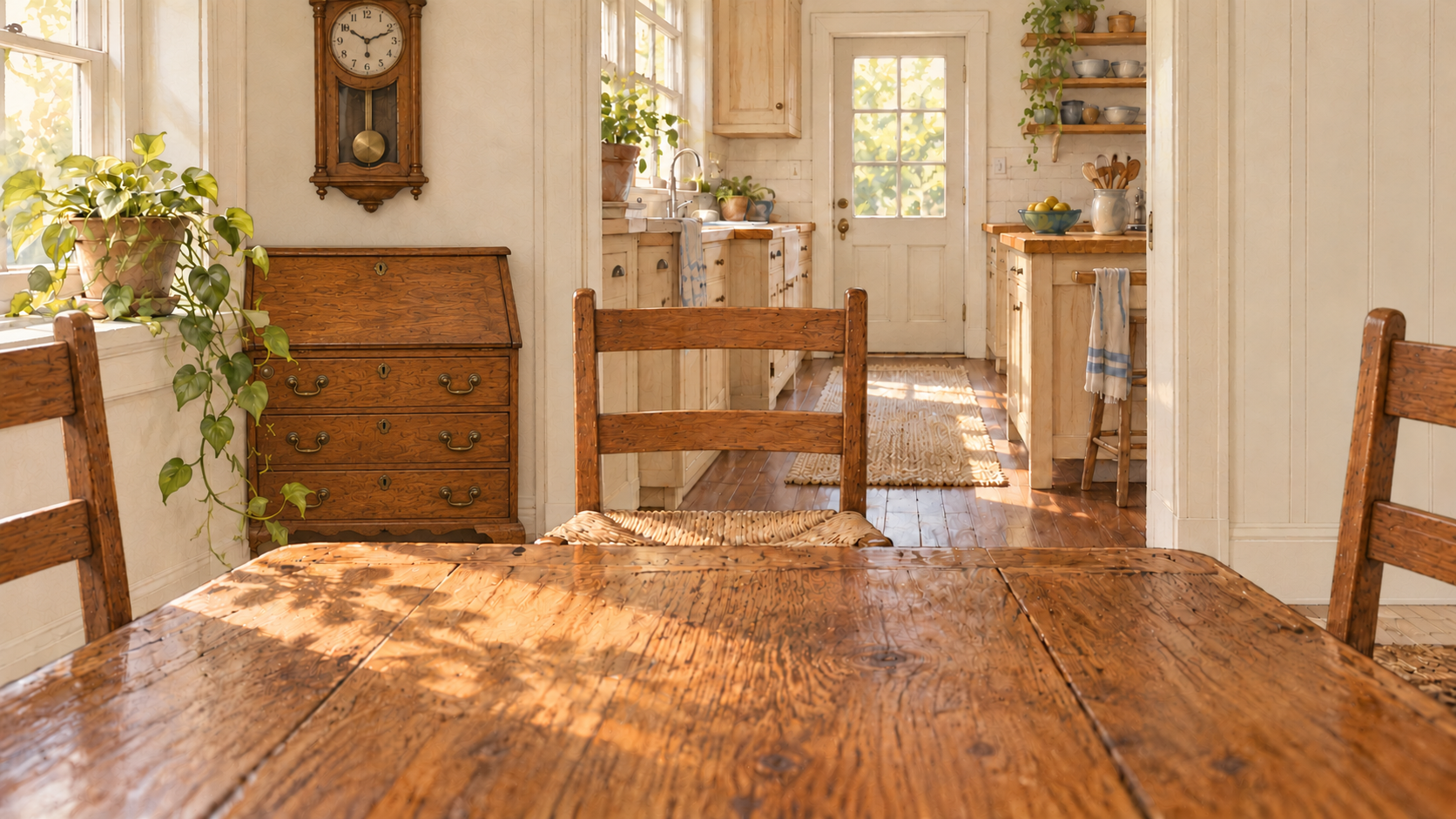
I also have her clock. The antique oak regulator that hung in the dining room where we spent so many hours at the table. It stopped working before she died, but when I picture us at that table, it is always there.
I have it now.
I still want to tell her things.
Maybe I’m still taking stock of my own generational wealth. Her generosity. Her determination. The certainty that she would come if I needed her. Those are things she left me, too, and I want to carry them forward.
Alongside them is a longing that has made me think more carefully about how I show up for the people I love. Do I ask? Do I listen? Do they know they can tell me the difficult things?
I wish my mother and I could talk about that now.
That may be the part of “no mom” alone I understand best. After all those years of trying not to need her, something happens, and I still wish I could call.