
There is a scene in Fried Green Tomatoes that has lived in my head for years.
Evelyn Couch is waiting patiently for a parking space when two younger women swoop in and take it. They tell her they are younger and faster. Evelyn pauses, then drives her car into theirs. More than once. “I’m older and I have more insurance,” she tells them.
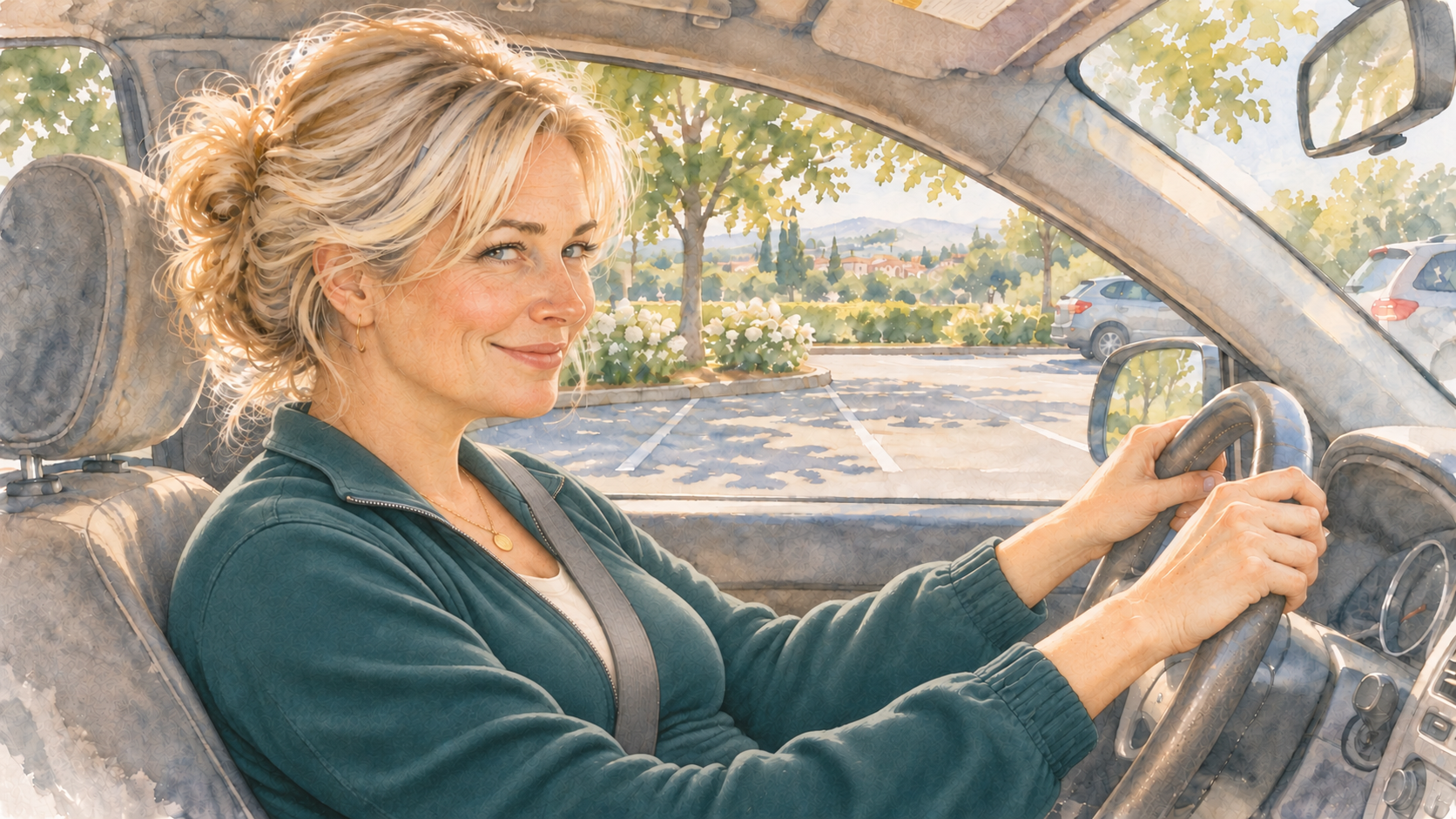
It is outrageous. It is funny. And every time I see it, some small, carefully behaved part of me cheers and I laugh out loud.
I have imagined ramming my car into someone else’s more times than I care to admit. Usually in traffic. Occasionally in a parking lot. I have never done it, largely because I like my car and my insurance premiums where they are. But when Evelyn backs up and hits that car a second time? I understand her on a spiritual level.
That, to me, is the Towanda Effect.
It doesn’t usually arrive with a roar. More often, it shows up in the middle of an ordinary day. Someone asks you to take care of one more thing, and you hear yourself say, “I can’t.” Someone interrupts you, and you finish your sentence. You state a preference without first making a case for why you’re allowed to have one.
These are small moments. They can feel enormous.
Like many of my Gen X sisters, I grew up believing we could do anything. We were encouraged to have opinions, build careers, make our own choices. But somewhere along the way, “you can do anything” became “you can handle everything.” We learned to be capable, accommodating, and reluctant to admit when something was too much. There is a point at which being easy to count on becomes difficult to live inside.
The trouble is that you may not notice yourself disappearing. You’re making decisions, solving problems, keeping things moving. From the outside, you look like a woman fully in charge of her life. But the things you want keep getting postponed until there’s time, until everyone else is settled, until one more obligation is out of the way. Then one day you realize how much of your life you’ve spent waiting for your turn.
Making yourself scarce can look a lot like being considerate. You say, “Whatever you want is fine,” before you’ve asked yourself what you want. You take the less comfortable chair. You wait until everyone else has spoken, then decide your thought doesn’t need saying after all. None of these moments seems important enough to argue about. That’s how they add up.
Eventually, people stop asking what you prefer. They have no reason to think you mind; you’ve become so practiced at saying “It’s fine” that even you believe it for a while. Then something small happens. Someone takes your parking space, or assumes you’ll rearrange your day again, and the anger feels wildly out of proportion. Maybe it isn’t about that one thing. Maybe it’s every time you moved aside without being asked.
Evelyn’s parking lot revenge is satisfying because it skips straight past the hesitation. Real life rarely gives us such a clean, cinematic moment. We may need a few attempts just to say, “Actually, I’d rather do something else.” We may say it with a shaky voice. We may spend the drive home wondering if we sounded selfish.
I think that counts.
Maybe the Towanda Effect begins when we stop treating that discomfort as proof we’ve done something wrong. Other people have grown used to the space we leave for them. Taking some of it back may surprise them. It may surprise us, too.
I’m drawn to Evelyn because she isn’t a fearless woman teaching the rest of us how to be bold. She is a woman who has felt overlooked and, for one glorious, ridiculous moment, refuses to cooperate with it. The movie lets her make a spectacular mess. We get to find our own ways of changing.
Maybe you admit that you’re angry about something you’ve been calling “fine.” Maybe you stop volunteering for the task everyone assumes you’ll handle. Maybe you say, “I still disagree,” and let that be enough. And maybe afterward, nothing dramatic happens. The world keeps turning. You begin to recognize the sound of your own voice.
I still laugh at the parking lot scene. I think of it now whenever I catch myself about to yield out of habit, before I’ve even considered what I want. It reminds me to pause. To ask myself whether I’m being generous, or whether I’m making myself scarce.
Some days I still give up the parking space. Some days I keep it.
Towanda.